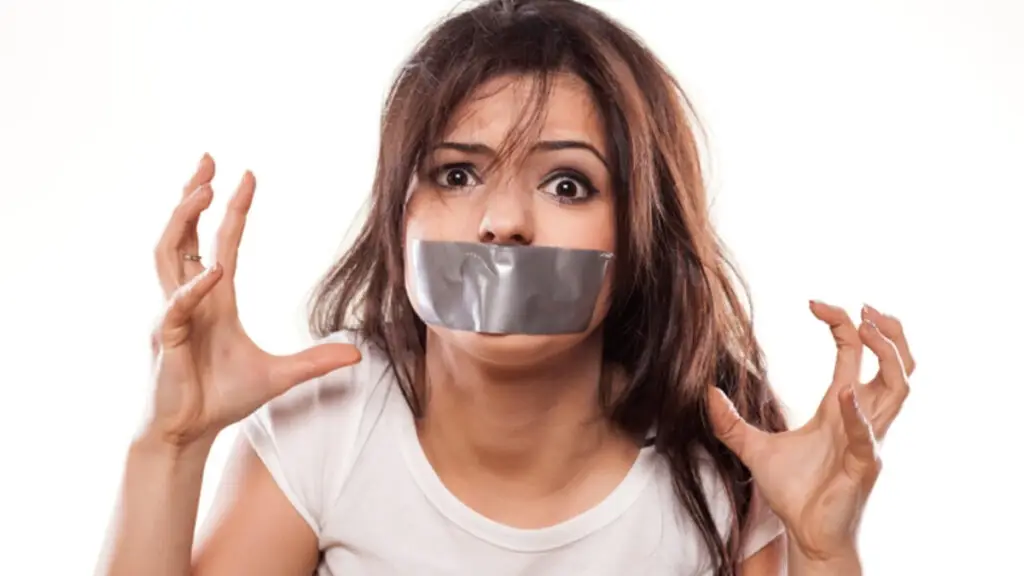
Free speech, of course, is a bad idea. Madness about free speech has been loosed upon college campuses throughout the nation, like a spreading flu. I exaggerate some, but not much. I could cite hundreds of examples, but here are three.
One, 469 students and faculty members at the University of Virginia demanded that the UVA president not mention the name of Thomas Jefferson at the school he founded, because he was a slave owner. One imagines that these students and faculty members will next demand that the Declaration of Independence, written by the same guy, be rescinded. Besides, the Declaration of Independence mentions “our Creator” — which violates so-called separation of church and state.
Two, the president of Hampshire College took down the American flag on campus because some found the flag offensive. Or was it that Quarterback Steven Kapernick was passing through campus?
Three, Iowa State University has adopted a policy that mandates that students not “harass” other students. “Harassment” is defined as whatever the person being harassed says it is. The First Amendment does not matter. If a student harasses another student, whatever that is, the Office of Equal Opportunity will place a “hold” on the violator’s graduation and place his or her name on a list of students for “review” by the dean of students.
You can’t make this stuff up.
Supreme Court Justices Antonin Scalia and Samuel Alito got the matter of free speech right. Said Scalia, “If we stop speech that hurts peoples’ feelings, the First Amendment will be a dead letter.” And Alito wrote, “There is no categorical ‘harassment exception’ to the First Amendment’s free speech clause.”
At the college where I’m a trustee — Lone Star College, with 100,000 students — we take the First Amendment seriously. There are no restrictive speech codes, no “safe spaces,” no prohibition of “microaggressions,” no mandated “trigger warnings,” and no refusals to let certain speakers speak on campus. Ours is not the modern version of Fahrenheit 451.
On December 1, 2016, in the face of rampant rejections against free speech, our Board of Trustees passed unanimously a new campus speech policy. My guess is that you will not find this policy codified on many, if any, college campuses in the entire country. The policy reads in the key sections: Speakers may not be disruptive, but “disruptive . . . does not include action that merely presents the possibility of discomfort or unpleasantness that often accompanies unpopular viewpoints.” Furthermore, the college will “not . . . infringe on any right of free speech or expression guaranteed by the Constitution of the United States.”
The Ivy League Colleges could learn from us.
As a former English professor, I’ve read a lot of statements that defend free speech, but none better than John Stuart Mill’s in On Liberty”:
“If any opinion is compelled to silence, that opinion may, for aught we can certainly know, be true. To deny this is to assume our own infallibility.
“Though the silenced opinion be an error, it may, and very commonly does, contain a portion of truth; and since the general or prevailing opinion on any subject is rarely or never the whole truth, it is only by the collision of adverse opinions that the remainder of the truth has any chance of being supplied.”
Speech is less free on college campuses today than it has ever been. Too many college administrators have been weaklings on free expression and lack courage. As C. S. Lewis, observed, “Courage is the most difficult virtue because it is all virtues at the testing point.”
Fight bad speech with good speech!
Share this:
- Share on Facebook (Opens in new window) Facebook
- Share on X (Opens in new window) X
- Share on LinkedIn (Opens in new window) LinkedIn
- More
- Share on WhatsApp (Opens in new window) WhatsApp
- Share on Telegram (Opens in new window) Telegram
- Share on Reddit (Opens in new window) Reddit
- Email a link to a friend (Opens in new window) Email
- Share on Pinterest (Opens in new window) Pinterest
- Share on Tumblr (Opens in new window) Tumblr
- Print (Opens in new window) Print