by Karen R. Effrem, MD, a trained pediatrician, and her husband have three children. She serves as Education Issues Chairman for Eagle Forum and president of Education Liberty Watch.
A push for more school-based mental health interventions has increased after recent high profile school shootings. One controversial and inaccurate mental health screening instrument is, “TeenScreen”, which is a 14-question computerized survey.
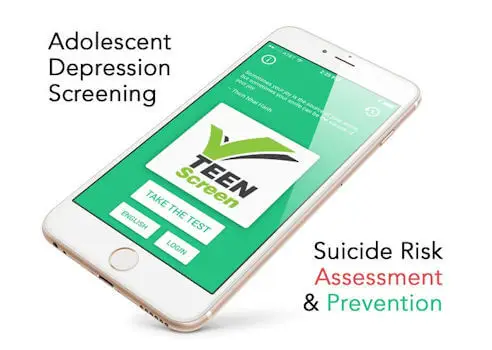 The vague and subjective questions in TeenScreen yield an astronomically high false-positive rate of 84 percent, as admitted by Dr. David Schaffer, who said the prediction “would result in 84 nonsuicidal [sic] teens being referred for further evaluation for every 16 youths correctly identified.”
In 2016, Stanford University acquired the rights to the TeenScreen test, and it was used in some school districts in 2018. Dr. Mark Olfson, the current scientific director of TeenScreen at Columbia University, testified before the federal School Safety Commission in July calling for expansion of “voluntary mental health screening” in an effort to prevent mass shootings, despite other parts of his testimony that contradicted his recommendation:
There are concerns that many young people are being unnecessarily treated with these medications because approximately two-thirds of the increase, the overall increase in psychotropic medication use in youth has occurred among those with less severe or no impairment.
These concerns have focused most intensively on anti-psychotic medications, particularly their use in very young children and children in the foster care system.
He does not realize — or will not admit — that the reason the overall prescription rate increase has occurred in youth with “less severe or no impairment” is due to the use of mental screening instruments like TeenScreen. Olfson does, however, admit some of the dangerous side effects of the medications:
Other severe effects associated with the antipsychotics include brain damage, movement disorders, suicide, and a 25-year shortened life span.
Psychiatric experts readily admit that their efforts to predict which patients will become violent are only slightly better than chance. A psychologist involved in violence-prediction research told the Washington Post, “There is no instrument that is specifically useful or validated for identifying potential school shooters or mass murderers.” Another said in that same article that doing so would endanger both public safety and civil liberties.
A psychiatrist who extensively studied the Sandy Hook shooter told the Los Angeles Times, “But unfortunately, it’s impossible for any of us to predict who is going to go from being troubled and isolated to actually harming others…It really means we can’t rely on prediction and identifying the bad guys. Because we’ll misidentify some who aren’t bad guys, and we’ll fail to identify others who may become bad guys.”
The New Freedom Commission on Mental Health promoted the Texas Medication Algorithm Project that strongly recommended the use of new antipsychotic drugs that have extremely dangerous side effects and have been no more effective than the older cheaper drugs they sought to replace.
TMAP was exported to many states across the nation, and the drugs were heavily prescribed to those receiving Medicaid benefits, including those in the foster care system. To have these most vulnerable children prescribed such potent and dangerous drugs in the pursuit of profits instead of for real medical need is a tragedy.
Parents and school administrators should be extremely wary of the expansion of mental health screening. Please send your comments about this to the federal School Safety Commission at safety@ed.gov and to your state legislators if your state is pursuing these programs.