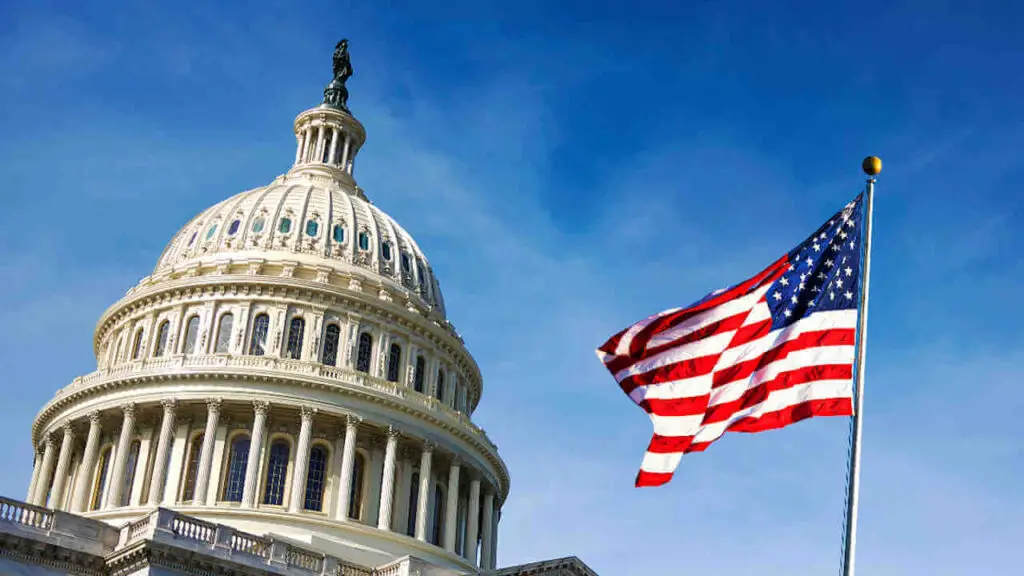
Washington, D.C., is quieter now that August recess is underway. Even though members of the U.S. House of Representatives left town at the end of July, the Senate stayed for two more weeks. Those two weeks resulted in more political shenanigans than results for the American people.
The government fiscal year (FY) expires on September 30th. If Congress does not pass spending bills for FY27 before that date, the result is a government shutdown. Because the Democrats have threatened to block the spending bills this year, the House decided to act proactively before they left town for the August recess. They passed a “clean” continuing resolution (CR) to simply continue the same funding levels in place this year. While a CR is never ideal due to the fact that this process doesn’t allow for scrutiny of federal programs or a reduction in federal spending, Congressional leaders felt that this strategy was the best way to avoid a government shutdown so close to the midterms. The hope was that the Senate would quickly pass the clean CR and take the threat of a shutdown off the table.
However, last week, the Senate shunned the House’s CR and created its own (H.R. 6500). Sadly, the Senate version included a delay on important delta-8 THC restrictions (the closing of the “hemp loophole”). Not only was the delay unnecessary and dangerous, but it held up the passage of the CR for days.
Originally, these restrictions were set to go into effect in November. This closed a loophole from a 2018 Farm Bill (that the Senate created) where delta-9 THC derived from the hemp plant could not exceed a concentration of 0.3%. The legislation made no mention of delta-8, however, leaving it unregulated. The intoxicating hemp industry went hog wild, putting delta-8 THC in gummies, drinks, and vapes that are easily accessible at grocery stores and gas stations. Children are becoming addicted, suffering from extreme side effects, and even dying from taking copious amounts. This industry created a billion-dollar empire while using an addiction-for-profit model geared towards children.
Even though the delay included in the CR was one month, it was suspicious and unnecessary when children’s lives are on the line. Proponents claim a delay would allow them to create a “framework” for more regulations per product. But we know the delta-8 lobby is not interested in being regulated! Eagle Forum pushed back on that narrative, calling the action a political ploy to undermine what is already set into law. A so-called “framework” could undo hemp restrictions altogether- an action in which the Trump administration has advocated.
Yes, sadly, the call to delay is coming from within the White House. The President’s Chief of Staff, Susie Wiles, has a personal interest in protecting the drug industry. Her son-in-law Bret Worley is the chief executive of companies that sell a variety of THC products. This is a sharp contrast to President Trump, who does not drink or use intoxicating substances. Yet, Wiles is a strong influence.
To our surprise, the provision to delay delta-8 restrictions ended up delaying the passage of the CR. Senator Ted Budd (R-NC) led a praiseworthy effort by offering an amendment to strip the delay language from the bill. He was joined by Sen. Pete Ricketts (R-NE). Eagle Forum rallied the grassroots to encourage their Senators to support the Budd amendment, sent letters to the Senate informing them we would add these votes to our scorecard, and personally called many offices to talk through the implications of this delay. We also joined with other like-minded organizations like Smart Approaches to Marijuana on a coalition letter outlining the dangers of delta-8. Similarly, 35 Attorneys General signed onto a letter asking the Senate to reject the delay.
The hostility toward the delay held up progress on the CR for nearly a week. Senate Leadership finally agreed to allow a vote on Sen. Budd’s amendment. Unfortunately, the vote was to table the amendment rather than on passage. The amendment was tabled by a vote of 61-32, with nine Democrats joining our side and six Republicans not voting. The CR then passed with the one-month delay by a vote of 90-6. When the House returns in September, they will have to vote on the Senate-passed CR. We are working with House Members to strip out the delta-8 regulation delay. Even if it passes the House in its current form, we must ensure that the hemp regulations go into effect on the new date of December 11, 2026.
At the same time as this fight, another issue was quietly brewing. Sen. Ted Cruz’s (R-TX) Protect College Sports Act (S. 4668) passed out of committee and was scheduled for a floor vote. This bill seeks to establish guardrails for college athletes regarding compensation, endorsements, and transfer rules. Additionally, a section includes language that purports to protect biological women from competing against biological men. The language is a bit messy, though, and there seems to be other language that states may be able to use to allow men in women’s sports.
Alliance Defending Freedom (ADF) – an organization that litigates cases for female athletes – sounded the alarm. Within the text was a preemption of state laws that would likely wipe out strong prohibitions on boys in girls’ athletics. In a press release, ADF stated:
The Protect College Sports Act, which addresses issues such as Name, Image, and Likeness agreements and student athlete transfers, creates an unnecessary risk of undermining the Supreme Court win, President Trump’s Executive Order, and many other hard-earned victories for women and girls. The bill sets general eligibility rules for college athletes and then preempts states from maintaining their own eligibility rules, which could include laws saying men are ineligible for women’s teams. For weeks, ADF has warned Congress that activists could misuse the bill’s existing preemption language to argue that states’ women’s sports laws can no longer be enforced.
Senators Jim Banks (R-IN), Josh Hawley (R-MO), and Tommy Tuberville (R-AL) introduced an amendment that would explicitly uphold the laws of states that protect female athletes. Eagle Forum sent an email to all Senators urging them to support this amendment. For now, the bill has stalled, and we are hopeful that Senators will fix the language after returning to D.C.
While we may not have won on the hemp delay and we have yet to see clarifying language in the sports bill, we are seeing more Senators stick their necks out for American families. We want to see elected officials who are willing to put up a fight for principles that preserve future generations.
You can learn how to make your voice louder and reach farther at our upcoming annual conference! From September 24-26 in Nashville, Tennessee, Eagle Council 54 will feature elected officials, experts, and activists who are finding ways, big and small, to uphold our Constitutional values. Learn more about Eagle Council here.
Share this:
- Share on Facebook (Opens in new window) Facebook
- Share on X (Opens in new window) X
- Share on LinkedIn (Opens in new window) LinkedIn
- More
- Share on WhatsApp (Opens in new window) WhatsApp
- Share on Telegram (Opens in new window) Telegram
- Share on Reddit (Opens in new window) Reddit
- Email a link to a friend (Opens in new window) Email
- Share on Pinterest (Opens in new window) Pinterest
- Share on Tumblr (Opens in new window) Tumblr
- Print (Opens in new window) Print