Editor’s Note:
The Book of American History
The last time the U.S. Department of Education gave the NAEP exam in U.S. History to 12th-graders, less than half of them (45%) scored “Basic” or higher. Fifty-five percent earned “Below basic,” the lowest possible achievement level. Only a tiny 1% reached the highest level, “Advanced.”
That was in 2010. Those test-takers are now in their mid-20s. They are now a solid bloc for the Democratic Party. They favor socialism over capitalism at an alarming rate. Half of them believe, too, that the United States in 2019 is a racist and sexist nation.
Now, the only way the younger generation can believe such things is for them to know very little of the history of their country. Yes, socialism sounds nice as long as you have no information about the record of socialism around the world in the last 150 years. And it’s easy to feel no patriotism when you do not know what the U.S. accomplished in World War II and the Cold War. And if you haven’t studied the Civil Rights Movement, you can’t appreciate the extraordinary transformation that occurred in a mere 20 years and recast racism as a sin, not an honor.
The political stupidity of the Millennials begins here, with historical ignorance. They have the wrong ideas about their country, which send them over to Bernie Sanders and AOC. They have passed through high school and college without taking courses and reading books that instill sound knowledge of the past.
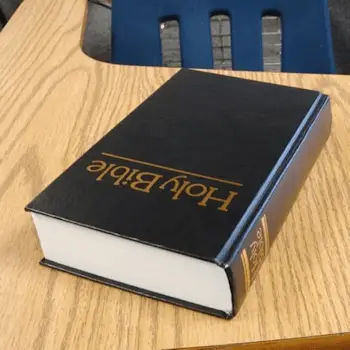 If you were to ask 100 25-year-olds what is the most important book in all of American history, nearly all of them wouldn’t know what to say. The question would barely make sense. Those few with some book learning might pick Huck Finn or Uncle Tom’s Cabin or Walden or Franklin’s Autobiography. I would be surprised if more than five of them chose the right answer: King James Bible, published just as the Puritans came to America.That book gave meaning to their risky adventure, specifically, the Exodus story in which a persecuted people escaped Pharaoh (the King) and crossed the sea to start anew in the wilderness, this time in better obedience to God. King James supplied Abraham Lincoln with the literary language in his speeches. The writings of Emerson, Thoreau, and Whitman are filled with the rhythms and diction of the Psalms and the Sermon on the Mount. Elementary school textbooks took their examples from King James, and Hemingway, Faulkner, and Steinbeck inserted high points in King James into their fiction. In the townhouse I lived in with other staff members at First Things Magazine, we said prayers together each night, led by a Lutheran priest. The rite included a group reading of a Psalm or two, which more times than I could count contained phrases that echoed Hollywood film titles, popular novels, and classic songs. Conclusion: If you haven’t read King James, your knowledge of American history is incomplete.
But, of course, King James isn’t taught in public schools, which is one reason why students score so poorly on U.S. history tests. Not only do they not know the King James contexts of American literature, politics, art, migration, and, of course, religion. They also do not recognize their country as an exceptional story. The plot of King James is ultimately a triumphant one. Through the catastrophes, errors, covenants, and sacrifices runs the idea of a special people with a special relationship to God. Can you imagine a better reason for young Americans to learn the history of their country than to promise those youths that they are the inheritors of a world-changing experiment that follows God’s commands?
The Bible gives young Americans cause sometimes to criticize their country, but always to understand it as uniquely worthy. People want to feel good about their homeland. If they don’t, they wonder why they should retain its history. What’s the point of remembering a rotten past? The less inspiration they take from tales of long ago, the less they hold onto them once the course ends.
King James is a way to stick the mission of America from the past to the present into kids’ heads and keep it there. It gives to their historical memory a purpose, while preventing their patriotism from slipping into arrogance. When educators in America took the Bible out of the classroom in a mistaken application of church/state separation, they pulled a core element of America from the instruction and denied our rising citizens a proper identity as proud Americans.
Mark Bauerlein is Professor of English at Emory University and Senior Editor at First Things.