Editor’s Note:
A Silent Majority Isn’t Good Enough In The Culture War
The “Silent Majority” comes up a lot these days, often in the context of a warning to Democrats about an electrified coalition of under-the-radar voters motivated to support President Trump by the left’s culture war. It’s true Democrats aren’t helped politically by their proximity to radical leftism, although I’m not sure I buy the argument it’ll cost them the Oval Office in 2020.
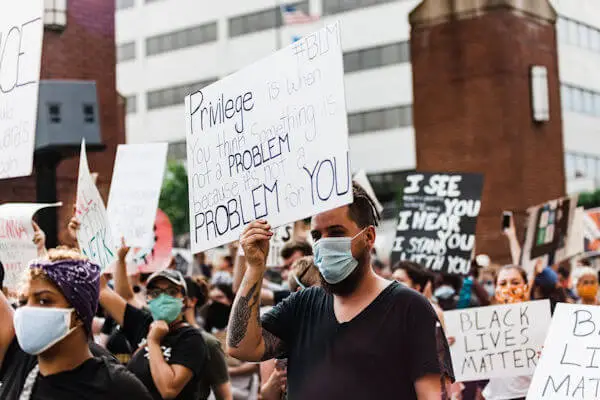 Whether the Silent Majority is enough to swing an election, it’s certainly no longer enough to swing the culture. If such a group exists, it needs to speak up.
I say that with deep empathy for everyone fearful of losing a job, friend, or relative if they push back, and for everyone with little interest in getting involved at all. That, of course, is the biggest challenge. There is a reason people are silent, and it’s a good one.
If, however, you happen to work at Boeing and a former Navy pilot is being forced to resign for a 1987 op-ed against women fighting in combat, consider that pushing back might not be as risky as you think. If you work in the public relations department, consider that weathering the social media storm might not be as costly as you think.
If you work at the Smithsonian—or any other organization—and a deeply racist guide to whiteness is being circulated, consider that it might be worth voicing your discomfort with a document that ascribes concepts like “self-reliance” to one racial group. Consider that a smart and well-intentioned rebuttal might find more support than you realize. Consider that it might be galvanizing.
If you work at or attend Penn State and the university is pressured to delete a tweet that welcomes conservative students, consider that a few calm defenses of the post might be enough to save it. Consider that saving it might send a message that reflexive appeasement is not necessary when angry leftists swarm on social media with unreasonable demands.
These are just a few recent examples, and it’s certainly possible that internal dissenters spoke out against each bad decision to no avail. The left’s progressive-or-bigot binary is an immensely powerful force, intimidating people into submission by implicating anyone who disagrees with the dogma in bigotry. Now that enough of its enforcers have migrated from academia into newsrooms and boardrooms, the left’s cultural power is snowballing rapidly.
Do what you can to stop it. Our silence is how these small battles in the culture war are lost. Don’t let the left terrify us into normalizing anemic police departments, hormone prescriptions for struggling children, Mount Rushmore and the national anthem as emblems of white supremacy, sanitized comedy, false history, impossible speech restrictions, and so much more. Finding the courage and wisdom to speak up, even on issues that seem trivial, will send the message that reasonable people disagree with unreasonable demands—demands that feel impossible for decision-makers and their band of ever-frantic PR professionals to resist.
Know that other loving, decent people likely share your concerns, be they in your PTA, company, church, family, or friend group. They’re scared too. The cost-benefit-analysis of voicing dissent just doesn’t seem worth it. But that’s how the left conquered our culture, by scaring people into silence. Unfortunately, however, the culture war is not won at the ballot box.
The Silent Majority is most often discussed in the context of elections, but we’re voting in the culture war every single day.
Emily Jashinsky is Culture Editor at The Federalist and a frequent host of The Federalist Radio Hour. You can follow her on Twitter @emilyjashinsky.