July 2020
A silver lining to COVID-19?
 The past four months of COVID-19 stay-at-home restrictions have seen an upheaval in education that is unprecedented in our history. With almost no warning, nationwide school closures in March catapulted parents into the role of teacher at home. For those who were accustomed to homeschooling, the changes were not so abrupt. For those who were not used to it, the adjustments were harder, at least at first. Now, though, many parents are reconsidering their initial misgivings. This is a good thing.
Scorn towards parents
Most of us have known for years that education “experts” have increasingly viewed themselves as the sole proprietors of children’s education. The magnitude of their scorn for parents’ abilities and even their rights became especially clear with a shocking article in the May-June issue of Harvard Magazine.
Elizabeth Bartholet, a Harvard law professor and faculty director of the school’s Child Advocacy Program, proclaimed that homeschooling should be banned because it “violates children’s right to a ‘meaningful education’ and their right to be protected from potential child abuse.” Ms. Bartholet’s definition of abuse, of course, is Judeo-Christian “indoctrination,” not admitting that her own secular humanism is considered by many to be indoctrination of the highest order.
No parents want to think their children’s teachers share these views, of course. It is important that parents understand, however, that national education leaders’ ideologies strongly influence what is recommended for local schools. Unfortunately, those philosophies have little to do with academics and everything to do with a liberal progressive worldview.
A good example of this was an April 15 headline on the National Education Association’s website: “Social and Emotional Learning Should Be Priority during COVID-19 Crisis.” While parents were worried about their children’s math and science and history lessons during the lockdown, the NEA was encouraging teachers to focus on children’s “emotional trauma,” with the teacher as the online support group leader. Even with academic topics, teachers were told to explore questions such as, “Do you see any examples of racism, privilege, and income inequality in any of the events that happened today” with COVID-19?
Before 1830 – a history of U.S. Education
How did we get to this disconnect between original American schooling and what is promoted today? Before the 1830s, education was private and very local, beginning in the family and then with one-room schoolhouses that were central to the lives of small communities. Judeo-Christian values were the foundation for children’s learning and were emphasized both at school and at home. Even schools that were not specifically church related recognized the importance of an education steeped in religious teachings and morals.
In 1839, however, politician and education reformer Horace Mann became intent on the notion that schools should be run by the government rather than by Christians. He firmly believed in secularism, and his primary goal for education was to train individuals to become obedient workers. He is credited with starting the first public school system in the state of Massachusetts.
In the 1920s and 1930s, John Dewey expanded on Mann’s views of the goals of education. Dewey emphasized that schools were where social change should be taught and promoted, also from a secularist point of view. As the recognized father of the progressive education movement, Dewey pushed the ideologies that we see in government schools today.
40-60% of parents
If there is a silver lining to the COVID-19 lockdown, it is that parents have been given a potentially helpful time-out to contemplate these realities in government-run public education. Many have realized that they can, indeed, teach. After all, they have been doing it since the day their children were born.
Parents are also being reminded of their God-given responsibilities to exercise good stewardship over their children’s care and upbringing. This includes education, which means they have the final say in what is taught to their children and the philosophies to which their students are exposed. And contrary to what many “experts” might think, they are fully capable of carrying out this responsibility.
As we have learned, the Judeo-Christian worldview that was the original foundation for schooling in our country is not welcomed by today’s education establishment. Why, then, should parents feel pressured to continue subjecting their children to values they do not agree with, such as social justice, socialism, transgenderism, pornography/grooming, graphic sex-ed, and anti-American history? Why can they not choose to provide academic instruction in an environment that supports their strongly held beliefs?
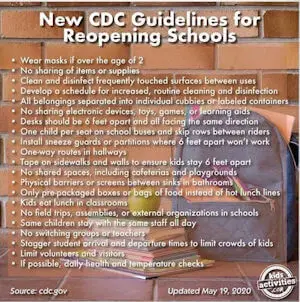
They can, and according to recent surveys, 40-60% of parents have indicated that they are seriously considering homeschooling, charter or private schools, and other alternatives to government-run education in the fall. Some of the reasons given include health and safety concerns, curriculum issues, and the overall environment of the schools. The CDC’s laughable guidelines for reopening schools have also contributed to their decisions.
Alternative options abound
Parents have more choices than they might think as they make decisions about their children’s education. The National Home School Association (NHSA) is a good place to start. Since homeschooling is regulated on the state level, there are usually active associations that can be of great help. Classical Christian academies and public charter schools are also alternatives for parents to consider. Parents who have successfully left public schools behind are also quite willing to share what they have learned. Several websites are listed below.
- Kids Are Home. Now What?
- Action Items for Parents Who Are Considering Alternatives
- Classical Christian Schools
- Charter Schools
- Hillsdale College’s Barney Charter School Initiative
- Classic Books for Young Children
- 32 Games Classic Games You Can Play Anywhere
Parents have more choices than they might think as they make decisions about their children’s education. Homeschooling, private schools, and public charter academies can fit the needs of almost any parents who have decided to remove their children from government-run schools.

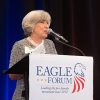
Susan Stradling, one of the founders and now the principal of tuition-free Pathfinder Academy in Mesa, AZ, spoke at Eagle Council 48 in Washington, D.C. In this video, she offers encouragement from her journey as a homeschooling mom of ten children, to now a more than twenty-year experience at Pathfinder.
Adam the Codebreaker in Letter Land is the world’s first ever phonics-based adventure novel. If you think that sounds boring, you are wrong. I could hardly put it down. I can certainly see that young children would be captivated as it is read to them or as they read it. Its author, Dr. Terrence Moore, field tested it by reading it to several classes of first and second graders.
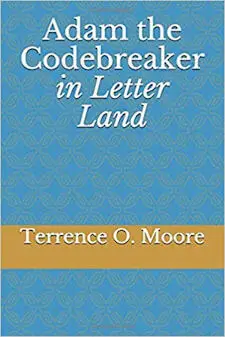 As teacher and classical school principal, Dr. Moore reminds us in his note to parents and teachers: “Human beings are creatures of language. After God made man, He brought ‘every beast of the field and every bird of the air’ to that man. ‘And whatever Adam called each living creature that was its name’… Everything we do we do through language.” A love of language instilled in children early through this fun, but instructive book will take them a long way in life!
Eagle Forum has for decades promoted phonics as the best reading system (in spite of the education establishment). We strongly recommend this book, and Dr. Moore’s Story-Killers about Common Core, to our readers. – Eunie Smith, Eagle Forum
Treat yourself as you read to your children, grandchildren or students! Purchase your copy of Adam the Codebreaker at eagleforum.org.