November 2020
 Stories of anti-Americanism, violent protests, and leftist ideologies such as Critical Race Theory have alarmed most citizens who want to live simple, moral lives without political interference.
Unfortunately, many of our traditional institutions have encouraged a new extremism, not the least of which are colleges and universities all across the country.
Even My Alma Mater?
It is hard for people to believe that American higher education almost universally subscribes to today’s leftist philosophies. Social justice, Black Lives Matter’s Marxism, and ridding the world of white supremacy have become mainstream university ideals. Most institutions of higher education have very few conservative voices, either on the faculty or in the administration. The leftist tilt has become so pronounced that organizations such as Campus Reform and The College Fix document instances of aggressive extremism on a daily basis.
In Their Own Words
 Examples of anti-American bias are too numerous to list, but several recent ones made headlines. On the Fourth of July, for example, publicly bashing America was great sport at a number of universities. A professor at Villanova said the American Revolution “contributed to the worldwide spread of white supremacy,” while an Ithaca College faculty member pronounced “God Bless America” to be a “warmongering song.” Not to be outdone in criticizing American traditions, a professor at the University of Wisconsin-Madison, upon hearing that college football would soon resume, tweeted that this decision was “a reflection of racism & capitalism.”
Do They Really Believe These Radical Ideas?
Yes, they really do. English and history departments, sociology and psychology majors, public health, and all the “studies” (women’s studies, pan-African studies, LGBTQ studies, etc.) could not be more serious about their worldviews. They teach them in their classrooms; they write about them in academic journals, and they present them at conferences across the country.
Colleges of Education are particularly susceptible to the indoctrination, which explains the leftward lurch of so many public-school leaders and boards of education.
It is Not Only Leftist Professors, However
Most university administrators are just as liberal as their faculty colleagues. Those in Student Affairs (the non-academic departments such as university housing, student activities, and counseling centers) have even more contact and influence with students because they oversee the residence halls, advise student groups, and provide psychological therapy. Radical political philosophies such as white fragility, decolonization, and intersectionality have become the norm, and students are surrounded by them day and night.
Shut Up or Face the Consequences
 Because of the politically charged atmosphere at so many universities, conservative students, faculty, and staff routinely self- censor. If they dare to express alternative views, they most assuredly will be chastised. At Harvard recently, a student editor of the Harvard Crimson wrote an editorial demanding that two instructors be fired for offering thoughtful academic commentaries that did not fit the prevailing leftist ideology on campus. Faculty at some universities have even been denied promotion and tenure because of their expressed conservative views.
Christians Often Receive the Brunt of the Censorship
In classes, in student organizations, and on social media, Christian students are a frequent target of censorship. Christian student organizations have been denied official recognition at some universities because they require their officers to be Christian. The Student Affairs offices view such a requirement to be “not inclusive,” so the organization is not welcomed on campus.
At one highly respected state university four years ago, a student who was president of a Christian organization complained to the dean of her college about the attempts to shut down Christian students’ free speech. The dean responded, “Ruth, students have been indoctrinated for the first 18 years of their lives by their parents and by their churches; we only have four years to undo the damage.” The student sued and the university settled, but she spent most of her undergraduate years fighting the administration.
Anti-Semitism is Also Alive and Well
Jewish students and their organizations also experience interference in their activities. Students for Justice in Palestine are notorious for disrupting programs sponsored by Jewish organizations. Complaints to university administrators usually fall on deaf ears, so the targeted Jewish students must hire security officers for their events.
Universities Receive Billions of Dollars from Enemy Countries
The radical influences are not only from within our universities. An October report from the Trump administration documents that top American universities have been receiving billions of unreported foreign dollars from U.S. adversaries for years. One prestigious university recently received more than $2 million from the Central Committee of the Chinese Communist Party, and numerous others have had lucrative contracts with entities in Russia, China, Saudi Arabia, and Qatar. The U.S. Department of Education is investigating these unreported “foreign entanglements” that might pose significant risks to national security.
Can Anything Be Done to Combat the Extremism?
 Parents, alumni, and taxpaying citizens should be alarmed. Radical worldviews are now pervasive, even in areas of campus that might seem immune.
This does not mean that constituencies cannot have an influence, however. College presidents typically are concerned with appearances and not rocking the boat, and they do not want to be on the front page, above the fold, of local or national newspapers. Liberal constituents are loud and insistent, though, so they tend to be heard. Conservatives must be louder:
- Call the university president or chancellor if you are concerned about what you are hearing and reading. It will take a steady onslaught of calls from many people to get attention, but they cannot ignore the complaints forever.
- Money does talk. Diminished student enrollments and losses of donor revenue have a significant impact on the bottom line.
- For public institutions, contact your state representatives, your governor, and your state board of regents or other higher education governing body. Describe your concerns and tell them you expect them to investigate.
- Visit your representatives at your state capitol and explain to them what you have discovered. They will be completely unaware of the details of daily university life and policies, and they will probably have a hard time believing the most egregious behaviors. Do not let them talk you out of what you know.
- Utilize social media. Universities (and legislators) hate bad PR, and they depend on your not sharing troublesome news.
The U.S. Department of Justice Is Helping
There is good news. The Trump administration, especially the U.S. Department of Justice, is starting to pay attention to how diversity bureaucrats are operating on college campuses. In a lawsuit against Yale University, the DOJ is investigating civil rights violations of Asian and white students who claim they have been discriminated against by Yale’s admissions policies. Similar lawsuits have been filed against Harvard. Should these and other universities be found guilty of discrimination, it could mean the loss of millions of federal dollars to the institutions.
Do Your Research Before Making the College Decision
 There are outstanding conservative colleges and universities that are intellectually challenging and provide a vibrant student life experience. Hillsdale College is one of the best known, but there are many others. Rankings such as those compiled by thebestschools.org provide helpful information about a number of stellar conservative institutions.
When you and your high schooler are considering a college or university, examine its website. Look at its mission statement and bragging rights but go much deeper. Read about the faculty in majors you might be considering. Also read the Student Affairs pages, especially housing/residence halls, health promotion activities, student organizations and leadership programs, and anything multicultural. You most assuredly will see some of the current “woke” lingo, but notice what is emphasized.
Remember That Four-Year Colleges Are Not the Only Choice
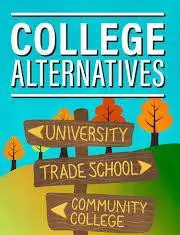
In our changing world, the traditional four-year college degree is only one of a variety of choices for post-secondary education.
Community colleges, technical colleges, and online degrees can meet the needs of traditional-age and older students. It is smart to take the time to study the alternatives if students are unsure.
Prepare Them to Be Challenged
 All students face new ideas and challenges after they leave high school. This is especially true when they go off to a new environment with students and faculty from a variety of backgrounds. Prepare them with a solid foundation of knowledge and values, and then encourage them to become familiar with support systems on campuses. Student organizations welcome like-minded new members, whether the group is faith-based, avocational, or professional.
Although conservative faculty and staff might not be immediately visible, they are there. Make an effort to seek them out.
If students find campus friends and mentors who share their values, they will be able to thoughtfully address the challenges, grow in their beliefs, and flourish during these important developmental years. Nathaniel Blake in his recent Federalist article admonishes us to cease our timidity in facing leftist bullying. As Charlie Kirk, Turning Point USA’s founder and executive director explains in Campus Battlefield: How Conservatives Can Win the Battle on Campus and Why It Matters, conservatives can take a stand and make a difference. Our next-generation and our country depend on it.
References:
- Campus Reform
- The College Fix
- Campus Reform
- Professor Says College Football’s Return Is A ‘Reflection Of Racism & Capitalism’
- What I Saw At A College Administrators’ Conference Will Make You Laugh And Cry
- Kane and Schaub: Harvard’s Instructor Problem
- University Ordered to Pay $700K in Legal Fees for Christian Professor Denied Promotion Due to His Conservative Views
- Vanderbilt’s “Tolerance” Policy Forces Christian Groups off Campus
- Georgia’s Colleges Are Suppressing Christian Speech
- Students for Justice in Palestine (SJP)
- Colleges Under Fire for Foreign Gift Reporting
- The 20 Best Conservative Colleges in America
- 15 Alternatives To College That Make Complete Sense
- Why The Right Can Never End The Culture Wars By Capitulating
- Campus Battlefield: How Conservatives Can WIN the Battle on Campus and Why It Matters
Dr. Everett Piper: Eagle Council Speaker 2017 – Washington, D.C.

Dr. Everett Piper: Ideological Fascism or Academic Freedom? Consequences of Abandoning Truth
Dr. Everett Piper is the author of the national best-seller, Not a Daycare: The Devastating Consequences of Abandoning Truth. Piper served as president of Oklahoma Wesleyan University for 17 years during which time he led his school from relative obscurity to a position of national recognition and influence. Piper presently serves as a contributing columnist for The Washington Times. His commentary on religion, education, leadership and politics is featured in local and national media outlets coast to coast.
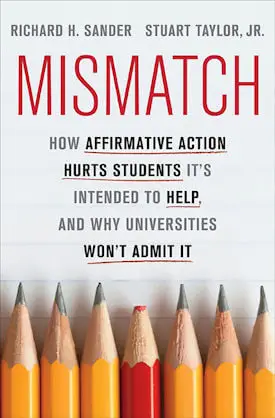 A review by Anne Schlafly Cori, Chairman of Eagle Forum
Has affirmative action hurt those it intended to help? What are the harmful and unintended side effects of schools that use racial preferences for admission? In 2012, Richard Sander started a discussion on a powerful sacred cow and the debate still rages today. Universities and law schools are invested in the symbolism of “diversity.” But let’s ask a question that elite schools do not want to ask: do preferences (whether racial, athletic, or legacy) in admission benefit the student?
“Mismatch” shows what happens with less-qualified students are placed in overwhelming academic environments, because selective universities cherry-pick students to create a “diverse” student body. It may sound desirable to go to a school that is academically challenging, but the reality is that struggling students drop out or change to an easier course of study. Just because you are the top student at your high school does not mean you are ready for Harvard.
Turns out that the key for academic success is how close the student is to the middle of the academic pack. Students learn less if there is a large “competition mismatch” and most of their fellow students are at a higher academic level. Generally, the less-prepared students never catch up. Sander writes that “affirmative action systematically lowers the learning of its recipients.” For many students, it is far better to graduate at the top of a middle-tier university than at the bottom of the class at an elite school. The student has achieved success and is not overwhelmed or discouraged. Sander cites evidence that students with top grades at a middle-tier school will have higher lifetime earnings than students who only get mediocre grades at a top-tier school.
Since no one turns down acceptance at Harvard, the result is a “cascade” effect of less- competitive schools having to use much larger preferences in admission standards. So the achievement gap is even bigger at middle-tier schools. “Racial preferences are supported by the American elite and opposed by the American public”, he wrote.
Entrenched interests want affirmative action to stay as is and ignore any data that challenges their tenets. Sander argues that “the entire structure of preferences for blacks at law schools failed as a system.” Universities have not been transparent about admissions and they should disclose their graduation and employment rates. “It’s immoral to admit people with lower credentials and keep them in the dark,” wrote Sander, commenting that law schools should not admit students who they know will fail the bar exam.
School recruiters can do a disservice to the students as they do not work in the students’ interests. The school and the student do not have the same goals. The school wants a diverse student body; the student wants a degree that will lead to a successful life. If you are admitted to a school, but do not graduate, what good has that done for you? No one puts “some college” on a resume. Dropping out of school can have a debilitating effect on students. They are 20-years-old, in debt, and been told they have failed.
It is very hard to succeed if you are miserable and “Mismatch” presents the data that students who have not matched academically to their class have a miserable life at school and a harder time finding success in life.
Affirmative action undermines the value of merit. The data in “Mismatch” shows that universities are pursuing diversity at the expense of the pursuit of excellence. Richard Sander uses data to show how individuals are harmed by school admission preferences.