“Why do you feel like you were assigned the wrong sex at birth?”
“Did your gender dysphoria start as a result of something like a trauma?”
“Have your parents or friends encouraged you to believe you are trans?”
These are just a few questions that a therapist is no longer able to ask children in states that have banned “conversion therapy.” According to the Equality Act, which was passed by the U.S. House of Representatives, “conversion therapy” is a “discredited practice” and “is a form of discrimination that harms LGBTQ people by undermining individuals’ sense of self-worth, increasing suicide ideation and substance abuse, exacerbating family conflict, and contributing to second class status.”
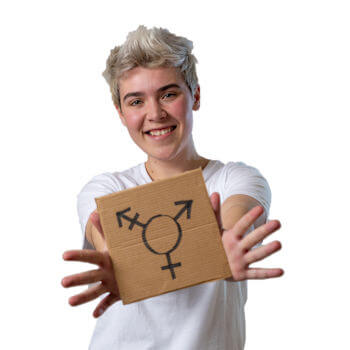 When the general public hears the term “conversion therapy”, they are encouraged to believe that it means electro-shock therapy or other physically and mentally abusive types of intervention designed to turn a gay person straight, otherwise known as reparative therapy. “Conversion therapy” is an umbrella term that is not defined in the Equality Act, but generally refers to any form of therapy that does not affirm sexual orientation or gender identity, including talk therapy.
Despite the claims of activists, there is no evidence that failing to “affirm” a child’s sexual orientation or gender identity “undermines” self-worth or increases suicidal ideation and substance abuse or that the therapy exacerbates family conflict.
Instead, the evidence suggests that both sexual orientation and gender identity are influenced by environmental factors, including peer and family pressures. Early childhood trauma can also cause children to identify as gay or transgender.
Children who believe they are transgender are encouraged to “transition” and adopt stereotypical characteristics of the opposite sex. Transitioning to the opposite sex includes starting puberty blockers or cross-gender hormones as young as eight years old. Girls are having their breasts amputated as young as thirteen, known as “top surgery”. Boys are being castrated as young as sixteen, known as “bottom surgery”.
A therapist’s referral is generally required for children to start these treatments. In states where “conversion therapy” bans have been enacted, a therapist is unable to question the desires of a child to start medically transitioning — because a therapist asking questions would be failing to “affirm” the trans feelings of the child.
I was a Transgender Child
When I could get away with it, I would use the boys bathroom instead of the girls. I practiced peeing standing up. I thought if I could master this, I could “pass” as a boy. I hated it when I had to dress as a girl. I hated my female body. Sometimes I would put duct tape over my vagina to hide it. Sometimes I would go into a rage and pound my vagina with a rock until it was swollen with bruises. Sometimes, when I brushed my hair, I would experience such self-loathing that I would beat my head with the brush, sharp bristles tearing into my scalp until my hair was matted with blood.
My first grade teacher, Ms. Hicken at Howard R. Driggs Elementary School, was concerned about my behavior and my insistence that I was a boy, so she referred me to the school psychologist. The school psychologist met with my mother, my teacher, and the school principal and made some suggestions for how they could help me feel more comfortable with myself.
Some of the recommendations from the psychologist included putting me in Bluebirds (Campfire Girls) or Brownies (Girl Scouts) so that I was around other girls, encouraging me to stop wearing my brother’s hand-me-downs, and exposing me to strong women who would be good role models. In states where “conversion therapy” is banned, it is illegal for therapists to make the simple recommendations that I had.
A man I recently met told me that as a child he was sexually assaulted by an uncle. As he grew up, he struggled to make friendships with other boys. He craved male companionship and started engaging in same-sex relationships. But today, a therapist’s suggestion that the boy is not old enough to decide if he is gay or straight is not permitted in states where “conversion therapy” is banned. Bans on “conversion therapy” prevent therapists from telling children that they are too young or too immature to be having gay sex.
Both this man and I were sexually assaulted as children. His assault led him to believe he was gay. My assault resulted in my developing a trans identity with the belief that if I wasn’t a girl, I wouldn’t be sexually assaulted again.
If he were a child today, “conversion therapy” bans would require therapists to tell him that he was born a homosexual and that being a homosexual is normal and natural. His therapist would never address the underlying cause of his same-sex attraction, and he would be denied therapy that would help him understand the impact the sexual assault had on him.
If I were a child today, “conversion therapy” bans would require my school psychologist to report to my teacher, principal, and mother that I was a “trans” kid. The school would allow me to dress like a boy, be called by the boy’s name [I’d picked out “Timothy”.] and use male pronouns. The school psychologist would likely insist that I be allowed to use the boys’ bathrooms at school and play on the boys’ teams. The school psychologist would “affirm” my belief that I was born in the wrong body and that my self-hatred was valid.
Between kindergarten and first grade my brother and I were abducted by two men and taken to a public restroom. I was brutally sexually assaulted and my brother was not. In my child’s mind, I thought that being a boy would prevent me from ever being hurt the way those men hurt me. Not my mother, not my school teacher, not my school psychologist knew that my trans identity was based upon my desire to keep my body from being sexually violated again. It took years of therapy before I understood the connection. If therapists had not been allowed to question my gender identity, I never would have made the connection. I never would have understood that my hatred of my female body was the result it being violently violated. I never would have realized that my transgender identity was a coping mechanism.
The talk therapy that helped me and many others is now illegal in many states. Children are being denied appropriate mental health services and therapists are required by law to “affirm” a child’s transgender identity or same sex attraction.
Transgender activists have adopted a philosophy regarding children with gender identity issues; children should be transitioned to the gender they identify with, first socially, and as they reach puberty, medically. These activists deny that talk therapy is helpful in managing and resolving gender dysphoria, and assert, without any proof, that it is harmful. No evidence supports transgender advocates’ contention that transitioning children is beneficial in any way, but there is strong evidence proving that transitioning can be harmful. A Swedish study shows that those who transition have a higher suicide rate.
Transgender advocates scare parents, telling them that if they do not allow their children to transition, their child is at risk of depression, anxiety, drug use, homelessness, and suicide. This fear-mongering convinces parents to allow children to dictate name changes, preferred pronouns, and medical interventions even though we recognize that children are not capable of making these kinds of life-altering decisions in any other situation.
There is no other situation in which therapists are encouraged, required, or legislated to affirm a child who has inaccurate perceptions about themselves. A child who suffers from anorexia is not “affirmed” in her perception that she is fat. A child who suffers from bi-polar disorder is not “affirmed” in a belief that he will rule the world when he is manic. A child who is crippled by anxiety is not “affirmed” that her anxiety is a healthy coping mechanism.