by Barbara Loe Fisher, www.nvic.org. Used with permission.
 The National Vaccine Information Center hosted a conference entitled, Protecting Health and Autonomy in the 21st Century, because at no time in modern history has it been more important for all of us to take a stand. This year, the orchestrated actions by governments around the world to restrict or eliminate civil liberties in response to the emergence of a new coronavirus has been unprecedented, and it has had profound effects on the global economy and on the physical, mental and emotional health of billions of people.
By mid-September 2020, there were about 29 million cases of the new Severe Acute Respiratory Syndrome (SARS-CoV-2) reported worldwide with about 925,000 associated deaths. The United States, the third most populated country in the world at 330 million people, had recorded over seven million cases and 198,000 deaths, with an estimated 598 deaths per million people, which is a higher death rate than Sweden, where health officials have refused to order masking or lock down the country and allowed the population to acquire natural herd immunity to the virus.
COVID Mortality Is Less Than 1%
According to the World Health Organization, the overall mortality rate for the new SARS coronavirus causing COVID-19 is about 0.6 percent, although some scientists say it is lower, while others estimate it can be as high as one to two percent in some parts of the world. Compared to Ebola with a 50 percent mortality rate or smallpox, at 30 percent; tuberculosis at 20 to 70 percent; diphtheria at 5 to 10 percent; or the 1918 influenza pandemic with a 2.5 percent mortality rate, COVID-19 is near the bottom of the infectious diseases mortality scale with a less than one percent mortality rate in most countries.
Those at highest risk for complications and death include the elderly and those with one or more poor health conditions. The CDC recently reported that only six percent of COVID-19-related deaths were solely due to coronavirus infection and 94 percent of the people who died also had influenza or pneumonia; heart, lung or kidney disease; high blood pressure; diabetes, or another underlying poor health condition. Most studies suggest it is rare for children to suffer complications and die from COVID-19.
Seven months after the WHO declared a coronavirus pandemic, and public health officials persuaded lawmakers to turn the world upside down, a lot of people are asking questions.
Q: Does wearing a cloth facemask prevent me from getting infected with or transmitting COVID-19?
There is an ongoing debate in the medical community about whether it is a good idea for all healthy children and adults to wear cloth masks.
In March 2020, the U.S. Surgeon General ordered the American public to stop buying and wearing masks because “they are not effective in preventing general public from catching coronavirus” and “actually can increase the spread of coronavirus,” which was the position of the WHO. But in April, the CDC walked back its “do not mask” order and urged all healthy Americans to voluntarily wear homemade cloth face coverings when entering public spaces.
In June, the WHO was continuing to say that, “At the present time, the widespread use of masks everywhere is not supported by high-quality scientific evidence, and there are potential benefits and harms to consider . . . Masks on their own will not protect you from COVID-19,” But by June, a number of state Governors and local governments had mandated facemask wearing and an epidemic of mask shaming had begun, which led to public protests against masking mandates. In August, the CDC doubled down and expanded face masking directives to include all children over the age of two, while the WHO warned that children under the age of six should not wear masks but children over age 12 should.
So confusion reigns. While some scientists are saying that if all healthy people are forced to wear face masks it will not stop the coronavirus pandemic and gives a dangerous and false illusion of safety, other scientists are demonizing the refusers, alleging that people refusing to mask up are “sociopathic” and have lower levels of empathy.
So what about getting tested for COVID-19? The CDC says that people should get tested if they have COVID-19 symptoms or have been in contact with someone who has been diagnosed with the infection. There is also an antibody test to identify whether or not you have been infected in the past.
Q: Will a lab test accurately identify if I am currently infected or have been infected with COVID-19?
Unfortunately, it’s not clear how accurate any of the tests are, especially the antibody test for past infection because the presence of antibodies may not be the only way to measure immunity. The best guess is that the range of reported false negative results for the nasal swab test is between two and 50 percent, and the reported false negative results for the antibody blood test is up to 30 percent, depending upon when during or after the infection testing is performed.
In July, a state lab in Connecticut admitted that 90 out of 144 people tested during a 30 day period — most of them nursing home residents — were inaccurately informed they were infected because of faulty, false positive lab tests. In August, 77 football players in the National Football league were given false positive test results when, after retesting, all the tests came back negative.
Q: If I recover from COVID-19, will I have long-term immunity against re-infection?
The CDC says it is unknown how long immunity lasts or whether you can get the new coronavirus infection twice. However, last spring researchers found that out of 68 uninfected persons, the blood from one third of them contained helper T-cells that recognized the mutated SARS coronavirus. They concluded the presence of these defensive helper T cells gives evidence for some residual immunity that may have been produced after common cold infections caused by other types of coronaviruses. This, the scientists said, “bodes well for the development of long-term protective immunity.”
Another important study was published in the medical literature in August providing evidence for robust memory T cell immune responses in people who had recovered from even mild or asymptomatic cases of COVID-19 but had no detectable virus-specific antibodies.
If people can have strong immune responses without symptoms and traditional antibody tests for proof of immunity don’t apply to COVID-19, public health officials may be underestimating the extent of population-level herd immunity that already exists in the U.S., where there have been more cases reported than anywhere else.
COVID Laws Are a Disaster
While doctors debate the science, it is becoming clearer that the response to the new coronavirus infection by government health officials has been a public relations disaster. The anxiety, fear, and chaos created by regulations instituted by most governments after the declaration of a COVID-19 pandemic has torn the fabric of societies and affected public opinion about public health laws and vaccination.
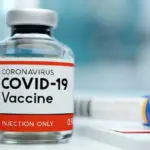
Now the people are being told that there is one — and only one — simple solution to resolving the crisis and getting back to normal: that is, the only way we can take off our masks and touch, hug, kiss, or come close to each other again is for every person living in every country to get injected with one of the liability-free COVID-19 vaccines being fast tracked to market.
In April, WHO officials at the United Nations launched a global initiative “to end the Covid-19 pandemic, proclaiming that, “no one is safe until everyone is safe.” By May, they were warning that if every person in the world doesn’t get injected with a COVID-19 vaccination, the virus “may never go away.”
The WHO, U.S. government and lawmakers in the European Union, along with wealthy and politically powerful non-governmental organizations like the Gates Foundation, GAVI, the Vaccine Alliance, and Coalition for Epidemic Preparedness Innovations have given the pharmaceutical industry tens of billions of dollars to develop and fast track experimental coronavirus vaccines to market and promote their universal use. At the same time, governments have given pharmaceutical companies a liability shield from lawsuits when COVID-19 vaccines injure or kill people.
The hard sell is on, but a lot of people are not buying it.
People Reject the Sales Pitch
Every poll taken this year has revealed that between 40 and 70 percent of people living in the U.S. and Europe don’t plan to get a COVID-19 vaccine when it is licensed.
Populations in developed countries are resisting the siren call for “solidarity,” as doubt about COVID-19 vaccines is becoming more common in developing counties, too.
Apparently, the pushback by a wary public has taken government officials by surprise. Apparently, they were banking that the economic and social deprivation, fear and chaos surrounding lockdowns would produce a bull market for experimental mRNA and DNA COVID-19 vaccines using technology that never has been licensed for humans.
It is widely acknowledged now that a solid two-thirds of Americans or more will “just say no” to getting injected with a vaccine containing lab altered parts of a new coronavirus that scientists admit they still don’t know much about, vaccines that preliminary clinical trials have revealed may well cause more than just a few minor reactions. A frustrated top U.S. health official has name-called Americans, who refuse to go along with public health policies and laws, calling them “anti-science” and “anti-authority.”
The truth is, people in this country and many others just don’t have confidence in the quality and quantity of the science or government health officials they are being told to trust.
Social Sanctions on Vaccinations May Align with Lockdown Sanctions
In the U.S. most public health laws, including vaccine laws, are enacted by the states, while the federal government makes vaccine use recommendations and can mandate vaccines for people crossing national or state borders. Local city and county governments also can impose their own public health regulations. That is why some states and cities have seen very restrictive COVID-19 pandemic masking and lockdown regulations and others have been more open.
If you will be punished for refusing to get a COVID-19 shot will be determined by your state’s laws. If you refuse to get a COVID-19 shot, you could be blocked from:
Being employed and going to work in an office
- Getting an education
- Obtaining a driver’s license or passport
- Boarding a train or other public transportation
- Attending a sports game or concert
- Entering a store, restaurant, bar, coffee shop or nail salon
- Booking an appointment with a doctor
Americans could be prohibited from checking into a hospital for surgery, or visiting a family member in a nursing home, or blocked from obtaining private health insurance and Medicaid or Medicare.
Broken Promises Means Broken Trust
Doctors and public health officials wondering why people don’t trust what they say about infectious diseases and vaccination, including coronavirus and COVID-19 vaccines, only have to look in the mirror to answer the question.
They act to protect the power and profit-making of their business partners: the pharmaceutical industry, medical trade associations, multi-national media corporations and Silicon Valley billionaires, and leave vaccine victims to take care of themselves.
What’s trust got to do with it?
Broken trust has everything to do with why the majority of people in the U.S. and Europe do not want to roll the dice and find out whether the odds of surviving a COVID-19 vaccination are in their favor.
It’s your health, your family, your choice. The mission of NVIC continues: No forced vaccination, not in America.
More information: Vaccination: What’s Trust Got to Do with It?
STOP COVID-19 Mandatory Vaccinations! Sign the Petition!