by Anne Schlafly Cori, Chairman, Eagle Forum
In an extraordinary act of generosity, a successful businessman, Robert F. Smith, while speaking at Morehouse College commencement exercises last spring, promised to pay the student loan debt of the 2019 graduating class. Everyone cheered.
Those who did not cheer were the ones who just missed out: the previous graduating class, the next graduating class, and any student who had dropped out of that class. I am sure that plenty of schools have asked Mr. Smith to speak at their commencement exercises next year.
Of course, Mr. Smith is free to donate his money as he wishes. That’s capitalism. Under socialism, the government confiscates Mr. Smith’s money and then the bureaucrats decide who will receive the hand-out.
Senator Elizabeth Warren has proposed an annual “Ultra-Millionaire Tax” of 2 percent on the net worth of taxpayers with over $50 million, which would then be used to cancel $50,000 of debt for each student loan. Under her plan, 75,000 Americans would be forced to pay money to 44 million Americans, plus her plan would turn the private student loans into government loans. Yes, that is socialism.
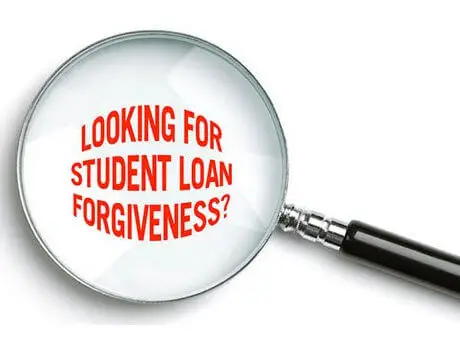 College today is too expensive and the loans that students get are huge for only one reason: the U.S. government is involved. Many student loans are subsidized by the government.
Everyone agrees that student loan debt is out of control, but disagrees on the solutions. The Democratic presidential contenders have promised to forgive student loan debt in the hopes that students and young adults will take the bribe and then vote for the Democratic candidate.
Student loan debt now stands at $1.5 trillion. Who should pay? Should American taxpayers be forced to bail out students? Or should the students take the responsibility for their own education?
For most Americans, college is not worth the price tag. But colleges have made big money by milking the student loan industry, because the college is always paid the money even if the student does not receive the education.
Colleges continue to raise tuition prices because higher education is not a truly competitive marketplace. Some colleges have amassed very large endowments, yet they force their students into debt for their services. Life would be so much better if the federal government got out of the loan business and stopped giving student loans to anyone who asks. If colleges did not have a pool of students with easy money, then tuition costs would drop and the cost of college would become competitive.
The reverse course of action, a debt cancellation, would inevitably cause tuition to increase. Inflation is always the result when the government throws money at the problem.
College is not for everyone. Less than a quarter of Americans complete college, but two-thirds of American students attempt to go to college. “Some college” never appears on a resume. Attending college is only worthwhile for employment if there is a diploma. To unlock the higher-wage benefits of going to college, the student must earn the degree. So many young Americans have been scammed, because they were told that they “ought” to go college and they “must” go into debt.
What about the students who drop-out? Every year, two million students drop out of college. The student loan debt does not disappear if you do not graduate. Even if the student never takes a single class, but signed for the loan to pay the college, the student is still liable to repay the loan. Thus the young person on the cusp of life has been marked as a failure: failure to complete school and loaded down with a debt burden, in addition to the time lost. The student loan debt then delays adulthood, including marriage and home-ownership. Thirty percent of freshmen drop out during their first year. Without a college degree, it is much harder for the former student to repay a loan. Taxpayers who have subsidized the education grant money have also seen their money wasted with the high dropout rate.
Since college today is a debt sentence that is crushing the next generation, should college be free? If the next president could make college free for all, then what would happen to education? Would the quality of education improve? Would students be able to choose their studies or would quotas be set for each major? Free college tuition would likely mean no freedom of choice for the students. College would become a socialistic command-and-control type of economy as students would be placed in majors.
College is not for everyone and nor should we insist that everyone go to college. Today, 41 percent of students who start college do not finish and graduate. If the tuition dollars were not guaranteed by the government, then schools would not accept students who are likely to drop-out.
Would making college free increase the number of drop outs? Free college could produce perennial students. Students should have a personal and financial stake in their own education. When students put their own money and sweat equity into getting a degree, then they value the degree much more. To work hard and achieve goals that earn money because others value what you offer is what makes for a happy and productive society.
The college admissions scandal — where wealthy people paid bribes to have their children accepted at elite schools — shows the fantasy of a college education. Certain college admissions are prestigious. If the student cannot legitimately gain acceptance to the elite school, then the student will likely fail the scholastics. But for many parents, the true goal of prestigious schools is the social: so that their children will have the right kind of friends. Elite schools push applications so that their acceptance rate is as low as possible and thus the school is even more exclusive and even more desirable as bragging rights to parents.
Good education benefits both the individual and the society. No one, not the individual nor the society, benefits from setting up students for failure. Fixing the college drop-out rate is a better solution than confiscating wealth and throwing more money at universities.