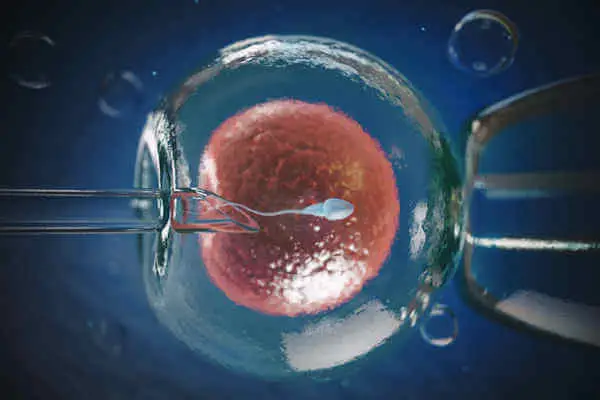
Who ever imagined that we would live in a world where selling babies would be acceptable and encouraged as an altruistic good? Of course, they are not exactly babies yet, but without these hot commodities, babies would be impossible. What are those commodities? Human sperm and eggs of course. They go for high dollar and the smarter, prettier and more accomplished the young man or woman selling them, the more expensive it is to obtain them. So, let us look at what it takes to “make a baby” using the advancement of medical technology.
The first “test tube baby” literally conceived “in glass”, was born July 25, 1978. Her name is Louise Joy Brown.1 In-vitro fertilization was developed by embryologist Robert Edwards and obstetrician/gynecologist Patrick Steptoe. In 2010 Edwards won a Nobel Prize for his work. By then, according to the Centers for Disease Control and Prevention, four million children had been born from IVF worldwide and seemed to be just as healthy as children conceived naturally.2 (Subsequently, there have been other studies raising concerns for the potential health risks to children and also as older adults due to having been conceived this way. 3 4) There was concern and controversy, especially from the Catholic church, who issued a reprimand to Edwards. Edwards replied, “I wanted to find out exactly who was in charge, whether it was God Himself or whether it was scientists in the laboratory… [I learned] it was us.”5
Assisted Reproductive Technology is technology to assist reproduction. It “includes all fertility treatments in which either eggs or embryos are handled.” The main type of ART is IVF. This involves extracting a woman’s eggs, fertilizing the eggs with sperm in a laboratory, and then transferring the resulting embryos into the woman’s uterus through the cervix.6 Due to the extraordinary cost of the process and the toll taken on those involved, most procedures result in the creation of far more embryos than are likely to be implanted in the womb. To have the “best chance” of a live birth, testing for genetic defects with Pre-implantation Genetic Diagnosis is expected, and often leads to the discarding of any “defective embryos.” Embryos can be selected (or rejected) based on their sex. IVF now represents 99 percent of the ART procedures in the U.S.7
In order to obtain eggs for IVF, a woman is given hormones through pills and injections to cause her to over produce multiple eggs (instead of one or two as in a normal cycle). Her eggs, typically a dozen or more, are surgically extracted from the ovary, using a long needle inserted through the cervix and into the bulging, hyper-stimulated ovaries. Once extracted, the eggs are placed in a petri dish with sperm which have already been washed and sorted for fertilization to take place and after a few days of incubation, inserted back into the uterus. If the embryo attaches to the lining of the uterus, it is called implantation.8 The CDC reports that 1.7 percent of all infants born in the U.S. are conceived using ART.9 However, only a third of couples undergoing infertility treatment with IVF take home a baby.10
Egg and Sperm “Donation”
When a woman’s eggs are unusable, from age or disease, egg “donation” is the go-to solution. Instead of the intended mother undergoing weeks of hormone treatments and surgical egg extraction, a younger woman is paid for “donating” her eggs and undergoing the process. In a much easier process, men donate their sperm to address male infertility or the desire of single women to “conceive on her own.” Still, rife with ethical dilemmas, young men are often handed porn to encourage a “donation” and the number of offspring are often unknown to him — ever.
Jennifer Lahl, founder of the Center for Bioethics and Culture Network has produced multiple documentaries about sperm and egg donation, as well as the impact on the children produced through this process. “Anonymous Father’s Day” explores the impact of sperm donors (especially their absence) on their offspring.11 “Eggsploytation” follows women who “donated” their eggs from altruistic or cash-strapped positions, with sometimes devastating and fatal results.12 Lahl insisted that the major problems with egg donation are:
- coercion of “donors”;
- eugenic commodification of egg providers;
- health risks to suppliers and recipients;
- effects of third party reproduction on the children produced.13
Just a few side effects of egg donation include: hypotension (low blood pressure), insomnia, depression, constant gnawing bone/joint pain), osteopenia, fibromyalgia, autoimmune diseases, and cancer. Eggs or embryos were donated in about 12 percent of all ART cycles in the U.S. in 2010, but the number of pregnancies using donor insemination are not tracked by the CDC.14
In her book Confessions of a Serial Egg Donor, thriller author and Swedish beauty, Julia Derek tells her story of donating eggs to put herself through University of California Berkeley, recruiting another donor (who committed suicide) and nearly committing suicide after her eleventh of twelve “donations.” Though she had been catered to throughout her “donations,” she did not receive the support she had expected when things started getting complicated and her body began to shut down.15 16
Money becomes manipulation in these cases. Derek desperately needed money for school and there are wealthy people who will pay a high price for eggs (and sperm) with the desired characteristics. When young women wait for the “perfect time” or better careers for themselves or their husbands, they are more willing to do “whatever it takes” to have a baby. When company insurance coverage makes it practically free, what is to stop them? Companies now advertise “open donations” to make it sound less like child-trafficking. This arrangement expects the “egg donor” (i.e. biological mother) to see and know the child, born to other parents, but biologically related to her.
To liken this to adoption, as some do, could not be further from the truth. Adoption offers a solution to an unsupported, unexpected, unplanned child — a loving choice to redeem a broken family. Buying eggs and sperm intentionally and deliberately separates children from their medical history, their biological mother or father, siblings, aunts, uncles, grandparents, and cousins, creating a broken family from the beginning. Egg “donation” uses a woman for her body. She is paid for her services and yet the transaction is called an “altruistic donation.” If young women are not paid, rarely do they put themselves through the pain of donating their own eggs to create offspring for someone else.
Making Children Into Commodites
Matt Doran and his sister Katy are rumored to be two of 500 plus offspring of “Kip.” Matt learned the story of his conception when he was 25 years old and about to have his first child. After two years of searching, he found his “bio-dad” and he now helps others to find their genetic family through DonorChildren.com. When Matt was asked what he thought about the use of “donor” gametes and he said he wished it were not legal.17
When “Donor Children” learn of their origin, not only does it set them on a journey to find their mother (or father), but due to the anonymity of the egg and sperm donation process, each grown man must eventually ask “Are you my sister?” Each donor-conceived woman will need to ask “Are you my brother?”
Adult children are often devastated by news of their conception, sometimes hidden for decades as was the case for the Emmons sisters. Dr. Paul Brennan Jones (age 80) of Grand Junction, Colorado assisted at least 10 women to conceive children between 1976 and 1997. He told his patients he was using fresh sperm from near-by donors, which now appears to be his own. Dr. Jones refused to answer questions or offer a DNA sample, telling a reporter he did not “want any incriminating evidence against him.” Learning that she (and her sister) are not related to her father of nearly 40 years was “devastating” and “turned our world upside down” she said. Through Ancestry.com and 23andme.com, the Emmons sisters found eight other half-siblings.
When singles or same-sex couples determine to “have a child of one’s own”, they have decided for that child that he or she does not need a mother or a father. Plenty of studies describe the impact of mothers and fathers, intact families and the success of children who grow up in them. No matter how hard our culture tries to erase the differences between men and women or even eliminate terms as mother and father, biology still matters. Procreating in this way is a form of child-trafficking. It is certainly cruel to these children, their future spouses and children who lose out on the family members they many never know. Katy Faust grew up in one such home and now through her organization, Them Before Us, she advocates for children to have the rights to a mother and a father ahead of the desire of any adult to produce a manufactured child.
When you can “buy” something, it becomes a commodity. When you pay someone an enormous amount of money which they desperately need, it easily becomes manipulation. We must not use another body to make children to call our own, but welcome them as gifts.
REFERENCES:
- Christina L. Manganaro, Louise Brown, First Person Conceived Using In Vitro Fertilization, Britannica, accessed May 18, 2020, https://www.britannica.com/biography/Louise-Brown
- 2010 Assisted Reproductive Technology Fertility Clinic Success Rates Report, CDC, American Society for Reproductive Medicine, Society for Assisted Reproductive Medicine.
- IVF Children Health Risks as They Get Older (healthline.com), https://www.healthline.com/health-news/children-born-via-ivf-face-higher-health-risks#Whats-causing-this?
- Children born using IVF could face serious health problems later in life, warns scientist – Mirror Online, https://www.mirror.co.uk/news/technology-science/science/children-born-using-ivf-could-7377480, February 16, 2016. Mirror
- Anjana Ahuu, “‘God Is Not In Charge, We Are,’” The Times, July 24, 2003, as quoted by Joy D. Riley in Christian Bioethics.
- Assisted Reproductive Technology, ART Success Rates, CDC, accessed May 17, 2020, https://www.cdc.gov/art/artdata/index.html?CDC_AA_refVal=https%3A%2F%2Fwww.cdc.gov%2Fart%2Freports%2Findex.html
- Christian Bioethics, 114
- Ibid., 115
- Assisted Reproductive Technology, ART Success Rates, CDC, accessed May 17, 2020, https://www.cdc.gov/art/artdata/index.html?CDC_AA_refVal=https%3A%2F%2Fwww.cdc.gov%2Fart%2Freports%2Findex.html
- Christian Bioethics, 117
- “Anonymous Father’s Day,” Center for Bioethics and Culture Network, http://www.cbc-network.org/anonymous-fathers-day/. Available with Amazon Prime.
- “Eggsploytation” Center for Bioethics and Culture Network, http://www.cbc-network.org/eggsploitation/.
- Egg “Donation” and Exploitation of Women — The Center for Bioethics and Culture (cbc-network.org), http://www.cbc-network.org/issues/making-life/egg-donation-and-exploitation-of-women/
- Figures from the 2104 Assisted Reproductive Technology National Summary Report, CDC, https://www.cdc.gov/art/pdf/2014-national-summary-slides/ART_2014_graphs_and_charts.pdf, For more national figures, see the CDC: https://www.cdc.gov/art/reports/2014/national-summary-figures.html.
- Julia Derek, Confessions of a Serial Egg Donor, 2004, Adrenaline Books, New York, NY.
- Venus Rising: Podcast #024: Julia Derek on Apple Podcasts, https://podcasts.apple.com/us/podcast/podcast-024-julia-derek/id1481872967?i=1000501265606
- Venus Rising: Podcast #008 – Matt Doran on Apple Podcasts, https://podcasts.apple.com/us/podcast/podcast-008-matt-doran/id1481872967?i=1000462383000, December 19, 2019.
Share this:
- Share on Facebook (Opens in new window) Facebook
- Share on X (Opens in new window) X
- Share on LinkedIn (Opens in new window) LinkedIn
- More
- Share on WhatsApp (Opens in new window) WhatsApp
- Share on Telegram (Opens in new window) Telegram
- Share on Reddit (Opens in new window) Reddit
- Email a link to a friend (Opens in new window) Email
- Share on Pinterest (Opens in new window) Pinterest
- Share on Tumblr (Opens in new window) Tumblr
- Print (Opens in new window) Print