Over the last 25 years, the United States has endured a social experiment in legalized marijuana. The results are in and even those in favor of looser drug laws (such as the New York Times) are appalled at the consequences from the easy access to a dangerous drug. Nearly 75% of Americans live in states with access to legal cannabis.
The campaign to legalize marijuana was marketed as pain relief for cancer patients, but most users today have no medical needs other than addiction. Cannabis has been normalized and the proponents claim that the users are grandmothers, not crazy stoners. But normalization has brought a proliferation of crazy stoners with especially deleterious effects on young men.
Marijuana is an extremely dangerous drug because so many Americans believe that it is not dangerous. More than 50 million Americans are using marijuana, which is double the number who use tobacco.
Can you smell that awful odor? If you live in one of the 40 states that have a form of legalized marijuana, then the answer is YES. It seems like marijuana and cannabis products are everywhere. The product is advertised on billboards with catchy names and candy colors. I receive advertising cards in the mail that promise a 50% discount on my first order. The “dispensaries” — a euphemism for pot shops — are often located on prime retail real estate.
A mind-altering drug that is still illegal under federal law is now socially and politically accepted across America. It has been marketed as a kinder and gentler option to alcohol or opioids. Some users (wrongly) claim that they are still sober when under the influence of marijuana. Three-quarters of Americans incorrectly think that the regular use of either tobacco or alcohol are greater health risk than marijuana usage.
This use of marijuana on a mass scale is a first in history. Our society is a guinea pig for what happens when a significant portion of the population is under the influence. Thousands of years ago, the Chinese warned that marijuana would make you see “dragons.” Now those dragons are breathing fire in our communities.
We must protect children and young adults from marijuana. The licensed use of marijuana in the states actually increases the unlicensed use by providing a thin veneer of legality. Legal marijuana has made illegal marijuana more attractive. Like tobacco and alcohol, the first time that most users try the drug is when they are a teenager, but marijuana has far worse consequences on developing brains. This drug has both short-term and long-term effects on the user. The daily users are not productive members of society and the increase in cannabis use disorder has wreaked havoc.
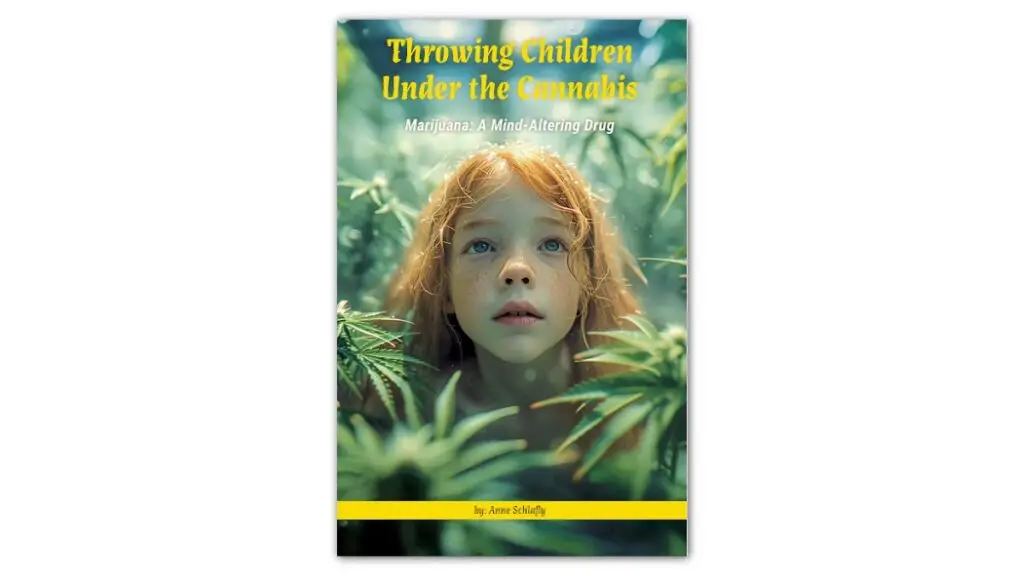
My new book, Throwing Children Under the Cannabis, is a manual for what you can do for your children and communities that have been infiltrated by marijuana. Please buy the book, distribute to your friends and family, and start a campaign to stop the proliferation of marijuana in your community.
Very High Anxiety
Nearly 30% of marijuana users will get cannabis use disorder, according to the Centers for Disease Control and Prevention. Daily marijuana use can also lead to the development of a psychotic disorder. Currently, a whopping 40% of marijuana users in America report that they use marijuana daily or almost daily. This intense usage frequently results in violent behavior.
The correlation between regular use of cannabis and psychosis is strong and the risk is much higher for males than for females. Whether males with mental illness are more attracted to marijuana or if the heavy use of marijuana actually causes the psychotic symptoms is not yet known. What we do know is that marijuana use is not benign. Many habitual users of marijuana develop psychosis, psychotic breaks, depression, schizophrenia, and other mental illnesses. At least 56 scientific studies have confirmed the link between high-potency marijuana and psychosis, including a 2020 study published in the Journal of American Medicine. This study found that using high-potency THC (the active ingredient that produces the “high”) was associated with “significant increases” in addiction and mental health disorders. The pot shops push the sales of marijuana with high potency for a fast “high”.
Mental health problems and substance use disorders go hand-in-hand. Substance use can trigger mental health symptoms, and mental health conditions can lead to substance use as a form of self-medication. Unfortunately, the users are self-medicating in the wrong direction. High usage does not relax the body; instead, high usage worsens depression and anxiety disorders. In long-term cannabis use, there is less dopamine in the body. So, frequent users develop a high tolerance and then they must increase their dosage in order to achieve their desired effect.
Marijuana-induced psychosis is not a one-off event. Between 30 to 50% of those with cannabis use disorder will later manifest chronic schizophrenia. These users will suffer lifelong injuries from their youthful experimentation in smoking pot. A single cannabis-induced psychotic episode is associated with a nearly 50% increased risk of developing schizophrenia. This intense drug use leads to bizarre episodes of violence that no one can really explain.
More than a quarter of adults with serious mental health conditions also struggle with substance use, particularly those with depression, anxiety disorders, schizophrenia, or personality disorders. THC has been shown to bind to the brain receptors that are involved in executive function, decision making, coordination, memory, and emotion.
A University of Colorado study found that neighborhoods with a single marijuana dispensary experience significant increases in property crimes, violent crimes, and homelessness.
Is marijuana hallucinogenic? It can be. Those who have cannabis use disorder can develop psychosis, which is an altered mental state separated from reality. Hallucinating is a symptom of psychosis.
Is marijuana addictive? It can be. Users can have a physical dependence on marijuana because withdrawing from the effects of the drug can take weeks. Users can have a mental dependence on marijuana when it is used in their social circles.
The American Psychiatric Association states that cannabis is not a medicine or even a beneficial treatment. “There is a strong association of cannabis use with the onset of psychiatric disorders. Adolescents are particularly vulnerable to harm, given the effects of cannabis on neurological development. Cannabis that is dispensed under a state-authorized program is not a specific product with controlled dosages. The buyer has no complete way of knowing the strength or purity of the product.”
We need public service announcements about how using marijuana regularly results in mental illness for many people, particularly young men. Starting to use marijuana before the age of 18 significantly increases the odds of developing cannabis use disorder. THC affects the development and function of the hippocampus, which is involved in memory; the amygdala, which helps process emotion; and the cerebellum, which is involved in motor coordination and the perception of time.
Vaping is the most common way teens use marijuana and the drug pushers have marketed their candy flavors to new users, which also masks the unpleasant smell. A quarter of seniors in high school reported that they had used marijuana in the past year, according to a 2025 University of Michigan study.
Is Marijuana Medicine?
Is using marijuana a better choice than using opioids? Is using marijuana a better choice than using alcohol? Too many Americans believe that marijuana is a safer or even “healthier” drug. Some users have turned to marijuana because they have turned away from the legal pharmaceutical industry.
“Medical” marijuana was sold to the public as a way to ease the pain of terminal cancer patients. No one wants anybody to suffer at the end of life, but that has been a strawman argument for legalizing marijuana for medical purposes. In the states with “medical” marijuana, 95% of the users do not have any terminal illnesses. In some states, any illness or excuse can be used to access “medical” marijuana. So-called “medical” marijuana was a political vote; it was not a scientific analysis.
The 40 states that allow “medical” marijuana have over 100 approved medical indications, despite the lack of evidence of cannabinoid effectiveness. No drug can be smoked and still be considered a medicine. All smoking is bad for the lungs and smoking marijuana deposits four times more tar in the lungs than smoking tobacco does. Smoking marijuana has 33 cancer-causing chemicals. Marijuana smokers have higher rates of cardiovascular disease, heart attacks, and stroke than non-smokers.
A review of 2,500 clinical trials and surveys in the United States and Canada was published in the medical journal JAMA in 2025. The review found scant evidence for the effectiveness of marijuana to reduce pain, insomnia, or anxiety. Dr. Kevin Hill, one of the authors of the JAMA review, who directs the Division of Addiction Psychiatry at Beth Israel Deaconess Medical Center in Boston, said, “There’s a whole group of people who are saying they’re using it medically, but they’re really not. They’re just rationalizing their recreational use.” The article specifically warns against inhaling marijuana because of the increased risk of chronic bronchitis and exposure to toxic substances in the plant.
The “doctor” who “prescribes” marijuana is only using a gimmick. These doctors “recommend”; they do not prescribe. Anyone can walk in and get a permission slip. There are no medical protocols for prescribing marijuana. “Medical” marijuana is not treated like any other doctor-prescribed drug. A key component in any prescribed medicine is the dosage. Most pharmaceuticals will cause adverse reactions if the dosage is too high. But in “medical” marijuana, the patient self-doses his medicine, which no doctor would allow with any other prescribed drug.
The Food and Drug Administration has not approved the cannabis plant for medical use. For this drug to be approved, there need to be double-blind studies, randomized tests, and — most importantly — quality control in the manufacture of the drug. However, the marijuana companies have no incentive to do any clinical trials on their drug, because so many states already allow sales of “medical” marijuana without any proof of efficacy.
All other doctor-prescribed drugs always come with a long list of potential side effects. In purchasing “medical” marijuana, there is no fine-print pamphlet with all the possible side effects that other pharmaceutical sales are required to contain. Physicians also want to know what other drugs the patient is taking, because there can be interactions with other medicines. Marijuana can intensify the effect of other drugs. The combination of marijuana and alcohol is particularly harmful, because using both exaggerates the effects of each drug.
There is no laboratory evidence that marijuana is effective for treating pain, insomnia, anxiety, depression, PTSD, ingrown toenails, or even curing cancer. No, marijuana has not been shown to reduce the size of tumors. There are important reasons marijuana cannot be defined as a medicine any more than bourbon could be. Some people self-medicate with bourbon, but everyone recognizes that bourbon can never be an effective or reliable medicine.
Even though pain management is one of the most common reasons people report for using “medical” marijuana in the U.S., there is limited evidence that marijuana works to treat most types of acute or chronic pain. The 2024 guidelines from the American Society of Clinical Oncology say that there is insufficient evidence to recommend cannabis for cancer pain.
Marijuana usage also has a deleterious effect on patients undergoing surgeries, because marijuana users typically require much more pain medication after major surgery than non-users. Users often do not sleep well without marijuana because sleeplessness is a withdrawal symptom. So, those who take marijuana for insomnia incorrectly believe that the drug helps them to sleep; in reality, they are avoiding the pain of withdrawal, which can last for a month.
Not only is marijuana not good for the brain, but it is actually bad for the brain. Chronic cannabis use causes damage and loss of retinal ganglion cells. Moreover, ganglion cells are central nervous system tissue, like the cells of the brain, and may serve as a surrogate marker for brain cell loss. This might account for neurological problems associated with heavy cannabis use such as memory loss, lethargy, and poor motivation, permanent IQ loss in young users, aggression, and psychoses.
Here are some of the side effects of taking marijuana: hyperemesis (severe nausea and uncontrolled repetitive vomiting), panic and paranoia, cardiac and lung problems, and increased risk for testicular cancer. Marijuana also degrades the quality of sperm and reduces fertility in males. Many male marijuana users experience a loss of sex drive and function and even impotency. They have fewer orgasms. Less sex probably leads to more unhappiness with the world around them, because who wants to spend time with a stoner?
It is not just the youth who are susceptible to the lures of marijuana. Marijuana is also being marketed to the elderly as a “natural, non-pharmaceutical” treatment. “Natural” drugs still can have unnatural side effects. All that “non-pharmaceutical” means is that the drug has not been double-blind tested for any of the symptoms or illnesses that it is supposed to alleviate. For the elderly, the real problem with marijuana use is the loss of short-term memory. Plus, marijuana can grossly interfere with other drugs that the elderly are taking.
Marijuana, which causes memory loss, is actually being marketed to dementia patients under the guise that this drug will improve their mood and quality of life. Feeding cannabis to dementia patients only serves to fatten the drug-pushers’ pockets; the seniors do not benefit.
Some marijuana proponents are now advocating for health insurance to cover marijuana. Since the government subsidizes health insurance, taxpayers should never be forced to pay for marijuana!
In determining a medical use of marijuana, we should follow the science and not follow the movement. Many studies have shown that marijuana is not a form of medicine and causes adverse reactions.
Time to Nip This Bad Experiment in the Bud
The answer to the problem of drug abuse is not to legalize and tax it, because too many lives are hurt by the proliferation of marijuana. Just because it is legal does not mean that it is safe. Legalization gives a veneer of approval and safety, which results in more people experimenting and using dangerous drugs, and then more people addicted and in need of social services. Collecting taxes on drugs only makes the illegal drugs cheaper and more desirable. The illegal pot shops can hide in the shadow of the legal ones. In California, legal marijuana is more expensive, illegal marijuana without taxes is easy to access, plus the state is not getting the revenues it anticipated.
Sin taxes disproportionately affect the addicted and poor. These victims need help and should not be a source of revenue for the government. Their needs will always cost the government more money than the taxes will ever recoup.
We should not let marijuana control and disrupt our society. Drugs will always be available and peddled to our children; we must win the social war to stigmatize marijuana. Self-medicating and using marijuana as pain relief is junk science.
Some communities and states have been very proactive in regulating the business of marijuana. Even in free-wheeling California, a whopping 85% of municipalities (cities and counties) have used local control measures to prohibit the commercialization of marijuana, including retail outlets, cultivation, manufacturing, and delivery services. Regulations can also limit the locations and hours for marijuana companies.
Use social pressure: Tell your children — and everyone else —that marijuana causes harm. Do not allow any usage in your home.
The U.S. Surgeon General issued a report on “Marijuana and the Developing Brain,” which concluded that “No amount of marijuana use during pregnancy or adolescence is known to be safe.” This report needs more publicity to change the perception of pot as medicine.
States that have allowed “medical” marijuana should have stringent medical regulations on the use of this product. Marijuana products should be required to carry a black-box warning, which is the highest-level alert for drugs with severe safety risks. Tobacco products are legally required to have warning labels. Marijuana should be legally required to have similar warning labels. The labels should warn against using this product when pregnant or nursing, also against driving or operating machinery, and a warning on the dangers of cannabis use syndrome which leads to psychosis and schizophrenia.
No, we have not lost the war on drugs. We must teach about the dangers to every generation. We must clean up our communities.

The Dangers of Legal Marijuana | Book signing event! | Ellisville, MO
Book signing event! | April 30, 2026 | 5-7 pm | Pillar Foundation, 15820 Clayton Road, Ellisville, MO 63011
Continue reading →Share this:
- Share on Facebook (Opens in new window) Facebook
- Share on X (Opens in new window) X
- Share on LinkedIn (Opens in new window) LinkedIn
- More
- Share on WhatsApp (Opens in new window) WhatsApp
- Share on Telegram (Opens in new window) Telegram
- Share on Reddit (Opens in new window) Reddit
- Email a link to a friend (Opens in new window) Email
- Share on Pinterest (Opens in new window) Pinterest
- Share on Tumblr (Opens in new window) Tumblr
- Print (Opens in new window) Print