by Jessica Zeigler, a former Executive Director of Eagle Forum in Washington, D.C. She lives in Charleston, South Carolina where she stays at home caring for her husband and daughters.
Any mother of busy children knows the reams of paperwork one completes when signing them up for gymnastics, swim team, robotics club, Vacation Bible School or any other activity. One line or box to check might be overlooked but poses a major threat to the future of privacy, especially our children’s privacy.
Printed below is the “media release” policy for a gymnastics class my daughter took. [Business name has been changed.]
The gym only took online registration and there was no opt-out option. I could not click anything except “I agree.” After several phone calls and emails to the business owner, I was able to verbally opt-out my child, but was told their software did not allow for online opt-out. Thankfully the owner seemed willing to abide by my wish not to have my child’s image used to make money, but I am ever vigilant. After all, I signed up my child for gymnastics, not a marketing campaign.
What’s the big deal about marketing? The big deal is Big Tech and facial recognition.
Facial Recognition is Everywhere
In January, the New York Times published a detailed article (“The Secretive Company That Might End Privacy As We Know It”) on Clearview AI, the maker of a facial recognition application. This app allows you to upload a picture and it searches its database of over 3 billion images for matches. It also “scrapes” images from Facebook, YouTube, Venmo, and millions of other websites, despite loose privacy policy prohibitions by those companies. Clearview then gives you all publicly available photos for that person along with the links to where on the internet they were found. Instead of “googling” a search term, it’s like googling a person’s face.
So if your photo is online, it is likely in their database. In the case of my daughter’s gymnastics class, if I had allowed them to post her image, she would likely be searchable by anyone purchasing the Clearview app, along with a link to her gym webpage listing the physical location of the gym. Her anonymity would be gone and safety at risk.
Facial recognition technology poses a grave threat to privacy in the age of surveillance and data tracking. According to Rep. Jim Jordan (R-OH) during a 2019 congressional hearing on this topic, nearly 50 million surveillance cameras exist within the United States. With Clearview technology, law-abiding citizens could be tracked on their day-to-day business (Big Tech with smartphones already does this in spades, but that’s another article).
Currently, Clearview markets itself mainly to law enforcement offices and private security firms, having agreements with over 600 agencies nationwide. Those individuals would be able to do a facial search for anyone (old girlfriend, political rival, neighbor, etc.) to find out if they were in a certain part of town last week or if they attended a political protest. There would be no anonymity. In fact Al Gidari, privacy professor at Stanford Law School stated, “Absent a very strong federal privacy law, we’re all screwed.”
While police may laud the ability to search massive databases for criminals caught on security cameras around town, they also admit the app can misidentify individuals and call into question the use of this technology in the courtroom. According to the Times article, defendants do not have to be informed that facial recognition technology was used unless it is the only means used. Further, Clearview has never been tested by an independent agency to evaluate the rate of false matches.
Perhaps my biggest concern is the marriage of the Clearview facial recognition technology with Facebook and other social media companies. Despite being the oldest of millennials, I have never had a Facebook account. However, Facebook likely has a shadow profile for me because they know I exist. They know I exist through data mining my friends’ phones who use Facebook. What is to stop Facebook from using facial recognition technology from creating a shadow profile on my children when their faces show up in a birthday party or gymnastics class photo posted to Facebook? I do my absolute best to never have my kids in photos online. (Ask any of my mom friends; they hear my rant constantly.) Keep your kids photos offline. It is not enough to just mark your account private. Do not post them at all.
Artificial intelligence, like that used by Clearview, is constantly growing. It is using your online photos to glean voluminous data on you. In popular hashtag “#10YearChallenge,” social media users post pictures of themselves ten years ago and currently side by side. No doubt facial recognition software is out there scraping these photos which may be used to predict facial aging or scan old photos creating a timeline of your life without you even being aware.
Stop Data Collection
Watch the Tom Hanks movie The Circle if you need any more details on where Big Tech plans on going. What is to be done? Congress and state legislatures must reign in Big Tech in every way. The House Oversight and Reform Committee held a series of three hearings on facial recognition this past year. At each hearing, a bipartisan spectrum of witnesses and Congressmen expressed a desire for a moratorium on facial recognition technology.
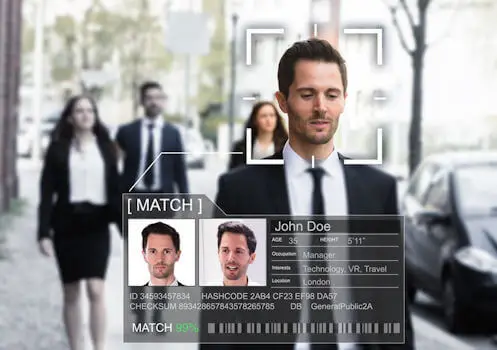 In order to protect our privacy, including that of our minor children, Congress should pass a ban on the use of facial recognition for minor children immediately. Further, Congress should pass a ban at best or a moratorium at minimum on the use of facial recognition software by government or commercial entities. State legislatures should get involved too, passing legislation prohibiting data collection on minor children (even anonymous collection), as well as other biometric privacy rights similar to those enacted by the state of Illinois.
Technology marches on. But as a society, we have the responsibility to protect ourselves and our children from our very images being hijacked.