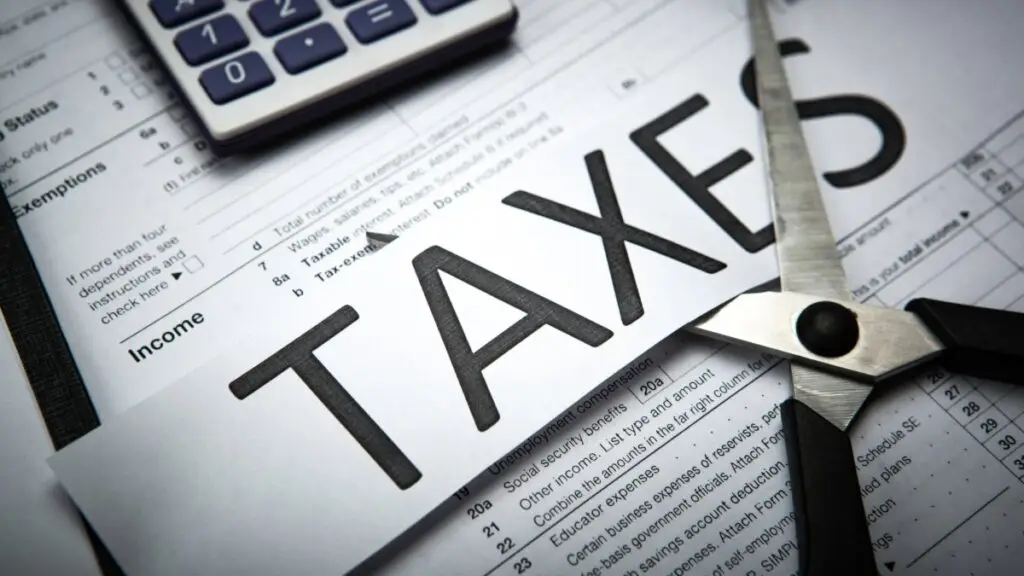
One ‘holiday’ comes around every year that is not celebrated but instead criticized – Tax Day. Taxes have been a thorn in our side since nearly the beginning of civilization. Taxes are often used to control behavior and fund things many find objectionable. Too many elected officials believe they know better how to spend our money than we do! In addition, sometimes those who are responsible for enforcing the laws are breaking those same laws: last year, over 6,000 IRS employees owed up to $46 million in back taxes. Thankfully, President Donald Trump signed a huge tax relief bill that gives us a lot to celebrate this April 15th.
On July 4, 2025, the President signed the One Big, Beautiful Bill (OBBB). The tax provisions are now referred to as the Working Family Tax Cuts. Republican Members of Congress have spent months explaining to Americans the benefits that are available to them from this legislation. Each week, they highlighted a provision and showed how real people have been able to keep more of their hard-earned money. For instance, the President brought DoorDash employee Sharon Simmons to Washington, D.C., to conduct the first-ever meal delivery to the Oval Office. The OBBB’s ‘No Tax on Tips’ provision has boosted her take-home income by $11,000 that she plans to use for her husband’s cancer treatments. Speaker Mike Johnson (R-LA) also brought in an Uber Eats driver from his home state of Louisiana to explain his story.
The tax cuts, which were passed with only Republican support, benefit people of all ages. Before 2017, the Child Tax Credit was $1,000 per child for kids under 16 years old. After the tax cuts enacted during the First Trump Administration, the credit was doubled to $2,000 per child. The Working Family Tax Cuts increased the credit to $2,200 and added a cost-of-living adjustment in the future, in $100 increments. The language also prohibits illegal aliens from cashing in on the credit.
Senior citizens will also get a $6,000 bump in their tax deduction. The instability of the tax code can be particularly risky for seniors who are on a fixed income and are navigating additional medical expenses or a higher cost of living. Even if a senior does not itemize their taxes, they can still receive this deduction.
A new program that the OBBB created was an Education Scholarship Tax Credit. This allows donors who give money toward a state-based scholarship program for K-12 tuition and expenses to deduct that donation amount from their tax bill. The catch is that each state must opt in so that its residents can benefit. Americans have been putting pressure on their Governors to do so and currently, 26 states have agreed to allow the program to operate in their states. Additionally, the bill loosened regulations on tax-advantaged 529 Education Accounts so that this money can be used for expenses such as books, tutoring, and fees for non-degree training programs. This means parents having more freedom to not only send their children to schools that best align with their needs but also to pay for extra help and vocational training if that is what is best.
The OBBB contains benefits you can see on Tax Day and some that have a year-round impact. Obamacare has harmed the healthcare industry, but Health Savings Accounts (HSAs) have been the salve to some of those woes. Many HSAs are tax-advantaged, which means individuals can contribute more money directly from their paychecks while employers get to avoid payroll taxes on these amounts. The OBBB expanded eligibility to HSAs to those on the Obamacare exchange. This will allow more people to become less dependent on the government to provide (mediocre) healthcare.
Some of the benefits are more subtle. The OBBB was spurred on by the looming expiration of the tax cuts put into place during President Trump’s first term. If those tax cuts were allowed to lapse, Americans would have seen, on average, a 22% increase in their tax burden. This would be a result of the Child Tax Credit, guaranteed deduction, and Death Tax Exemption reverting to their higher levels during the Obama years. Americans may not realize that they were saved from having their taxes doubled this year thanks to the extension of the tax cuts.
Eagle Forum released a list of provisions in bullet points last July, if you would like a refresher. Also, Advancing American Freedom recently published their One Big Beautiful Booklet containing information about each provision in the One Big, Beautiful Bill, if you want to go deeper into the policies.
Of course, improving the tax code and achieving affordability is an ongoing mission. House Ways and Means Committee Chairman Jason Smith (R-MO) conducted a hearing on the Working Family Tax Cuts in March. He explained that under the new laws, a family of four that makes up to $73,000 per year would owe nothing in taxes and would receive more in take-home pay. However, some bad actors exploit our tax system under the guise of non-profit organizations. He stated:
Our investigation has uncovered organizations operating in the United States who push Chinese propaganda, incite violent protests and riots, facilitate foreign interference in our elections, and support terrorism. Tax-exempt status is a privilege, not a right. On behalf of the American people, we will fight to ensure this privilege is not abused. The agency must work to ensure our tax code is not weaponized against the American people to carry out the agenda of foreign actors.
Since that hearing, the committee’s investigation into Islamic Relief USA (IRUSA) has found ties to terrorism, promoting antisemitism. Chairman Smith has recommended that IRUSA’s tax-exempt status be revoked. Several additional organizations are still under investigation for similar activities.
The tax system must be reformed to benefit families and weed out fraud. The OBBB and Working Family Tax Cuts take a good first stab at doing so. Unfortunately, we must continue to “render unto Caesar’s what is Caesar’s,” but hopefully, you found a little bit more in your own pocket this year. With the House and Senate working on a slew of government spending bills, more updates will be on their way. To stay on top of the latest Capitol Hill activities, make sure you are subscribed to our emails and alerts.
Share this:
- Share on Facebook (Opens in new window) Facebook
- Share on X (Opens in new window) X
- Share on LinkedIn (Opens in new window) LinkedIn
- More
- Share on WhatsApp (Opens in new window) WhatsApp
- Share on Telegram (Opens in new window) Telegram
- Share on Reddit (Opens in new window) Reddit
- Email a link to a friend (Opens in new window) Email
- Share on Pinterest (Opens in new window) Pinterest
- Share on Tumblr (Opens in new window) Tumblr
- Print (Opens in new window) Print